Technology serves human
Technology alone does not provide security.
It becomes valuable only when it supports a clear security strategy and enhances operational control.
SDS uses so-called « passive » technology to strengthen information, such as detection, signalling, and alerting.
Better information reduces uncertainty, minimises waste, and prevents avoidable incidents.
Technology: why and how
Cameras, sensors and dashboards are effective only when deployed with a clear purpose, appropriate response protocols and defined accountability. Without this operational framework, technology creates misplaced confidence, unnecessary complexity and confusion when an incident occurs.
SDS analyses each requirement before selecting, comparing and implementing the appropriate solution. Every component must serve a precise operational objective and deliver measurable security value.
Anyone can sell and install 1,000 cameras. The real expertise lies in knowing where 10 carefully selected cameras can deliver the same or a better security outcome.
A short security history
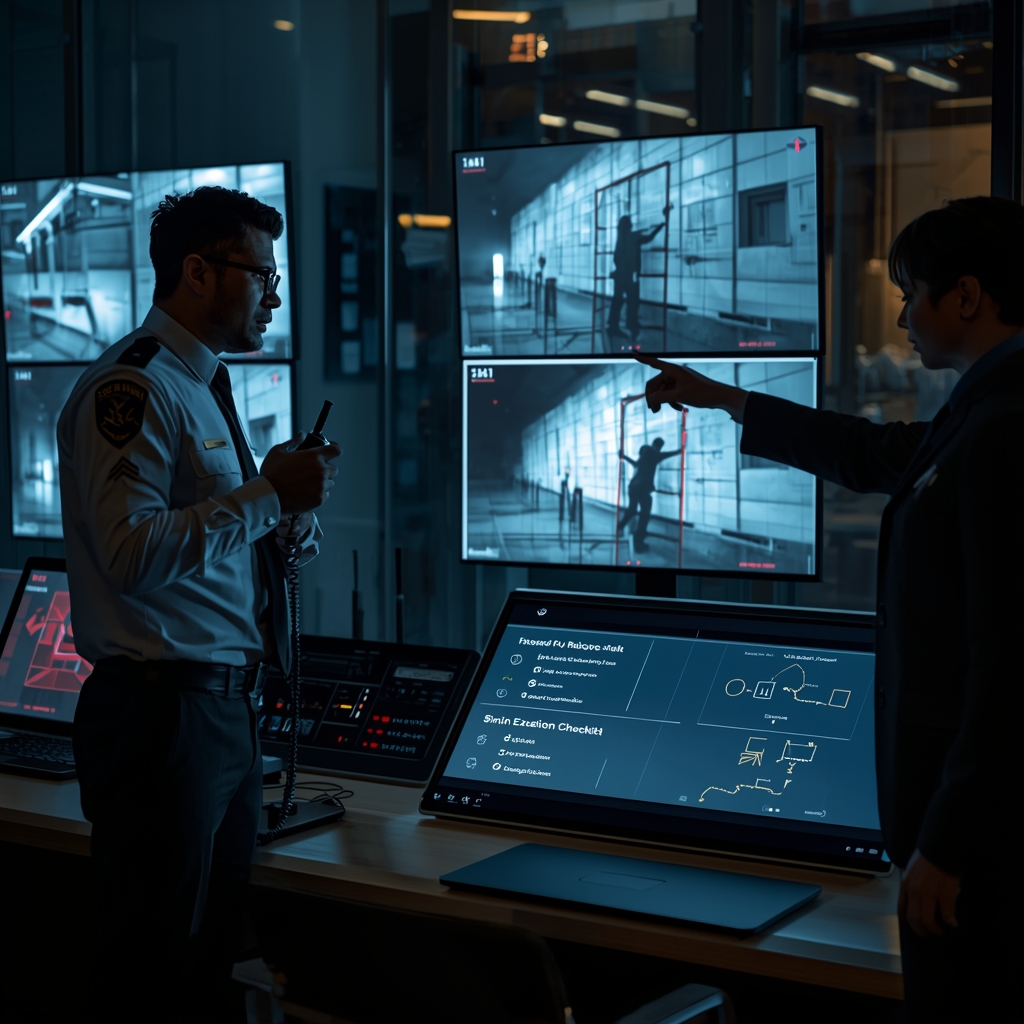
Security once depended largely on numbers: more guards, more patrols and a greater physical presence. Watchtowers, optical devices, and later, cameras extended visibility, reduced personnel exposure and enabled more efficient deployment of manpower.
Digitalisation then connected surveillance technologies to IT systems, enabling centralised and remote monitoring across virtually any distance. Yet this progress also created a recurring weakness: critical information gradually moved away from the operational teams expected to act on it. Screens multiplied, alerts accumulated, and real-time intelligence too often became unused data.
At SDS, technology remains firmly integrated with operations. Information must be relevant, immediately actionable, and supported by clear responsibilities and response protocols.
SDS Integration
SDS
- Defines the concept, posts the duties, and specifies the reporting lines.
- Integrates the technology that supports those duties.
- Trains the teams to execute the SOP and use the tools correctly.

Practical outcomes
When the right technology is integrated into a security programme,
it produces practical outcomes:
- Clearer situational awareness,
- Faster decision-making,
- Stronger documentation,
- Fewer gaps across shifts,
- Reduced reliance on improvisation,
- Transparency and follow-up,
- Improved working conditions,
- And the most: Cost control!