
Shock, the Apparent Calm and Crisis
Why do some events seem under control before giving way to a major crisis?
1. Everything seems to be getting better… until suddenly, everything changes
In security, as in many other areas of life, events do not always follow an obvious pattern.
An illness may begin with a few mild symptoms. They may go unnoticed or be dismissed as fatigue or a minor inconvenience. Then the signs accumulate, difficulties emerge and may even appear to subside… before the situation suddenly takes a turn for the worse.
An organisation can experience a similar pattern.
An incident occurs. It may be relatively minor or far more serious. Teams respond, the situation is brought under control and normal operations resume. Calm appears to have returned. Everyone goes back to their usual routines, and the incident is gradually considered a thing of the past.
Yet sometimes, without anyone immediately understanding why or where the problem is coming from, the situation begins to deteriorate. Questions arise, consequences escalate, the organisation’s reputation comes under scrutiny, and its normal operations may be seriously disrupted.
What appeared to be over may not have been over at all.
This is precisely why we need to distinguish between three often-confused dimensions: the shock, the apparent calm and the crisis.
2. The Shock: Responding to the Event
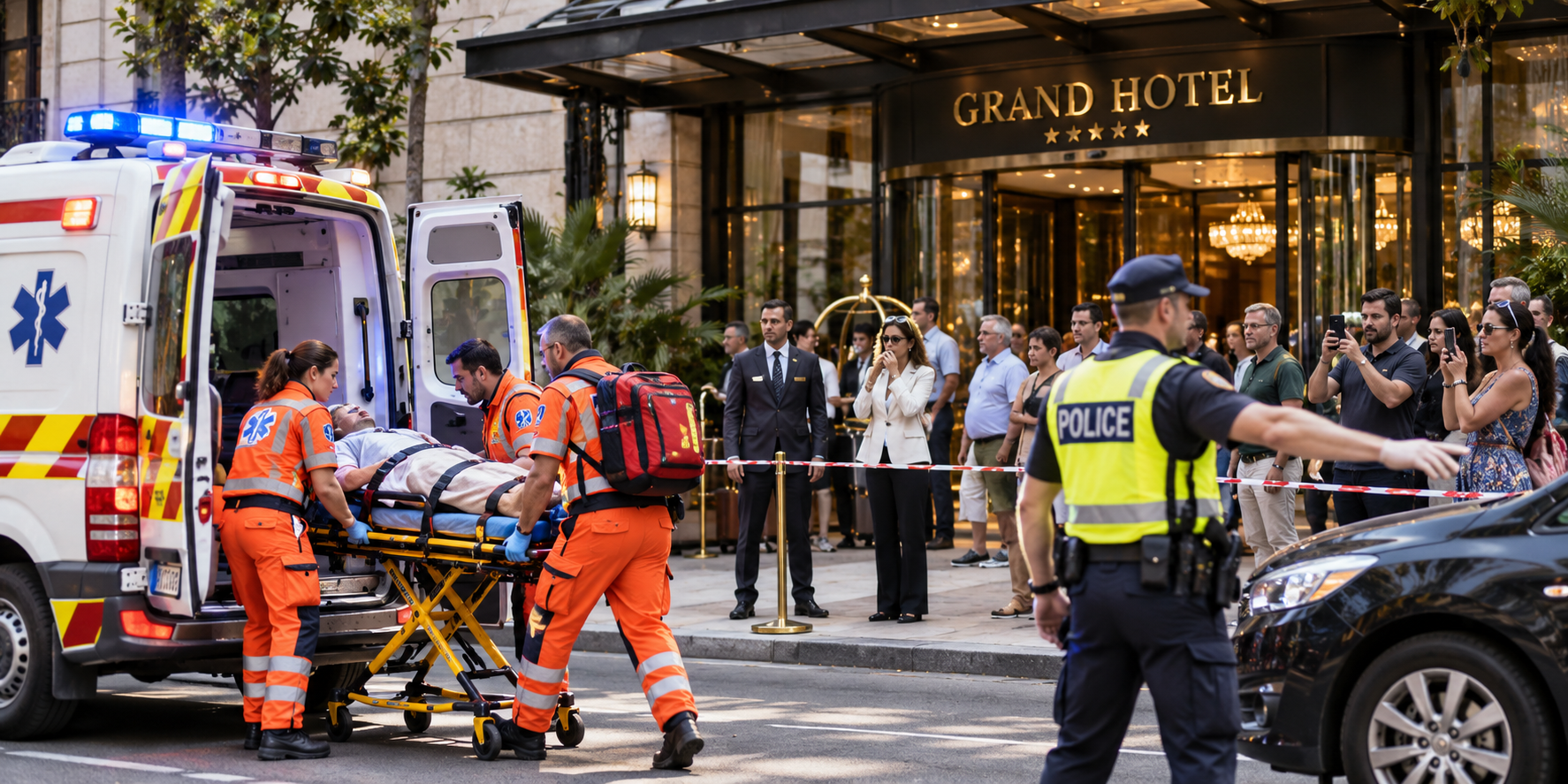
A shock occurs when an organisation faces a sudden, unwanted event that requires an immediate response.
It may involve food poisoning in a restaurant, a drowning incident in a hotel swimming pool, an accident at a school, an attack on an embassy or a severe storm.
These situations differ considerably in nature and severity. However, they all have one thing in common: they demand action.
The immediate priority is to protect people, safeguard property and bring the event under control or, where this is not possible, limit its consequences.
An organisation’s ability to withstand a shock depends, among other things, on the quality of its prior risk assessment. A poorly assessed, misunderstood, or inadequately addressed risk can considerably worsen the consequences when an event occurs.
The situation becomes even more serious when the threat was already known, yet the organisation failed to take the necessary precautions.
An organisation’s environment is also never static. An existing threat may evolve, change in nature or grow in severity as circumstances change. Risk assessment must therefore consider not only what already exists, but also what may develop from it.
A shock does not simply reveal the nature of an event. It can also expose how prepared those confronted with it are.
3. The Apparent Calm: Understanding What Has Just Happened
Once the organisation brings the event under control, it enters a period often mistaken for a simple return to normality.
Yet this may be one of the most important moments of all.
Teams have resumed their activities, the immediate emergencies are over, and the pressure appears to have subsided. But bringing an event under control does not necessarily mean that the organisation is out of danger.
On the contrary, this is the time to step back, understand what happened, and examine what the event revealed about the organisation’s ability to function under emergency conditions. Were the decisions appropriate? Did the teams have the resources they needed? Did the organisation function as it was supposed to?
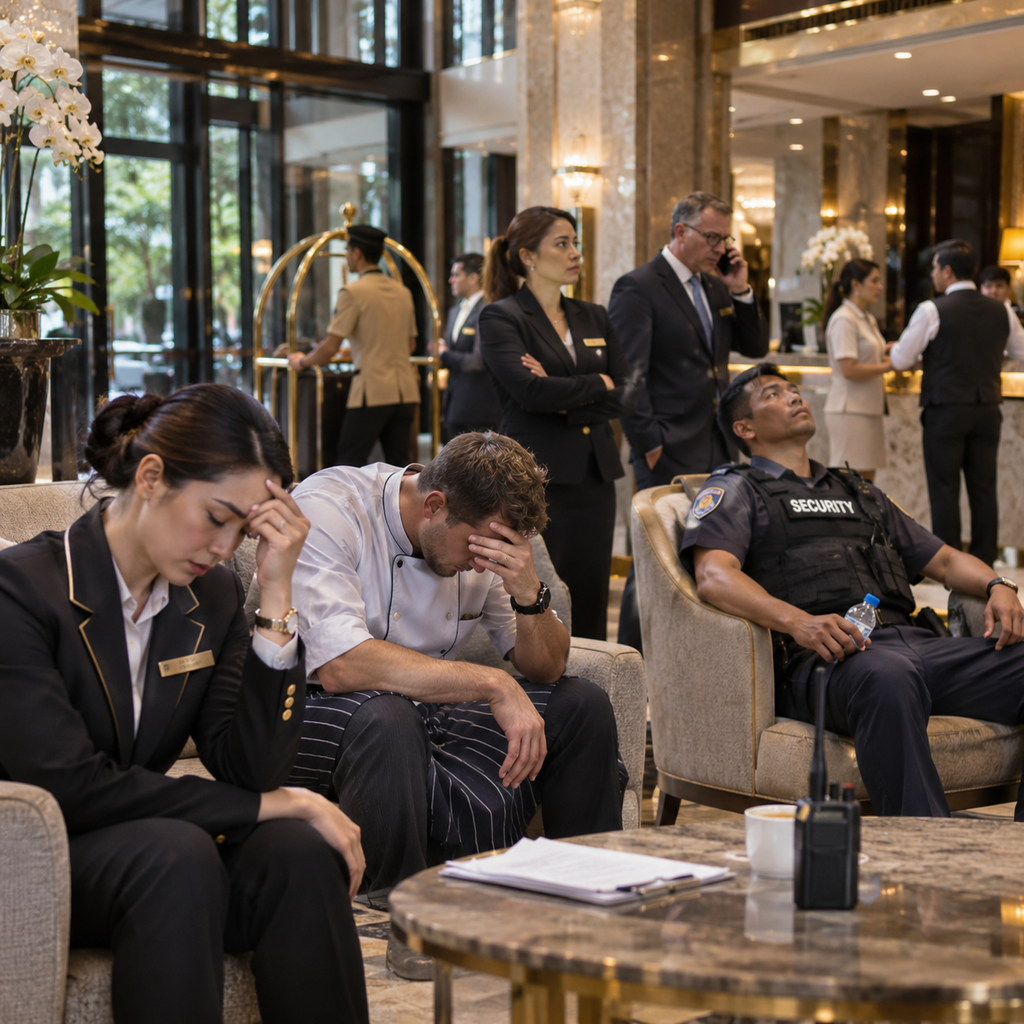
Once the organisation brings the event under control, it enters a period often mistaken for a simple return to normality.
Yet this may be one of the most important moments of all.
Teams have resumed their activities, the immediate emergencies are over, and the pressure appears to have subsided. But bringing an event under control does not necessarily mean that the organisation is out of danger.
On the contrary, this is the time to step back, understand what happened, and examine what the event revealed about the organisation’s ability to function under emergency conditions. Were the decisions appropriate? Did the teams have the resources they needed? Did the organisation function as it was supposed to?
An organisation that has experienced a shock can emerge stronger, provided it does not simply resume its activities as though nothing had happened.
It would be unrealistic to claim that an organisation automatically emerges stronger from an event in which it may have lost valuable time and energy, suffered human or material losses and faced significant difficulties.
It emerges stronger because it has grown. It has gained experience, acquired new knowledge, and developed a sharper perspective and a more precise ability to respond. This is where the familiar saying truly finds its meaning.
Experience can become a genuine security asset. A mountain resort, for example, that has previously been affected by one or more avalanches can draw valuable lessons from those events and become better prepared to anticipate a similar situation in the future.
This period should also allow the organisation to look beyond the event itself. In a sense, it is about going back in time to understand what could have been anticipated and what needs to be anticipated in the future.
An initially limited threat may evolve as its surrounding environment changes. A new business activity, a shift in the local economic balance or the emergence of new opportunities for criminal activity may transform a situation that had previously been relatively stable.
Apparent calm must therefore never be mistaken for the disappearance of danger.
A return to calm does not necessarily mean a return to normality.
4. The Crisis: When the Organisation Itself Is Under Threat
A crisis follows a very different logic.
It may result from a poorly managed shock, but it can also emerge independently of any spectacular event. It may develop gradually, almost imperceptibly, far from the original incident and beyond the immediate field of attention.
A crisis does not necessarily begin where the shock occurred. It may develop hundreds or even thousands of kilometres away, while the organisation concerned has already resumed its normal activities.
Imagine an incident occurring aboard a cruise ship operated by a prestigious international cruise company. The crew responds, passengers are cared for, and the ship continues its voyage. On board, the situation appears to be under control.
However, passengers eventually return to their home countries. Some share their experiences, publish photographs or post reviews on travel platforms and social media. Accounts begin to circulate, multiply and potentially reach a considerable audience.
The crisis then begins to develop far from the place where the incident occurred. It feeds on personal accounts, their circulation and the perception they create among future customers, business partners and the wider public.
Meanwhile, the organisation may still believe that everything has returned to normal.
Let us now consider two situations involving the same hotel.
In the first, the hotel is the victim of a terrorist attack. The shock is considerable, both in human and material terms. However, if the hotel has not committed any particular fault, it may be perceived primarily as the victim of an external act that is unjustifiable and universally condemned.
Solidarity from other establishments, public sympathy and cooperation with the authorities may help restore confidence. The hotel may also demonstrate that it has learned from the event and strengthened its security arrangements.
In the second situation, two guests suffer from food poisoning after eating fish in the hotel’s restaurant.
The event may appear far less spectacular. Yet public perception changes dramatically. The establishment may be held responsible, or at least suspected of having failed to meet its obligations.
Bookings may decline, negative reviews may multiply, and business partners may distance themselves. Social media and online review platforms can greatly amplify the incident’s reach, while competing establishments may take advantage of the damage to the hotel’s reputation.
Its reputation is affected. Its finances may quickly suffer. The establishment may then face a genuine crisis, even though the initial incident involved only two people.
Of course, an external attack can also trigger a crisis if it exposes security failures. Similarly, food poisoning does not automatically lead to a crisis. Much depends on responsibility, the circumstances, and how the organisation responds to the event. One point must therefore be understood: the severity of the shock does not necessarily determine the scale of the crisis.
The shock threatens people and property. The crisis threatens the organisation’s reputation, finances and, ultimately, its long-term survival.
It therefore requires a response that goes far beyond operational intervention alone. Management must make strategic decisions and carefully control communication to preserve trust.
Three Dimensions, One Common Objective: Protecting the Organisation
The shock, the apparent calm and the crisis are not necessarily three consecutive stages. A crisis can develop without any preceding shock having been identified. However, when an event occurs, these three dimensions help us better understand the challenges an organisation may face.
At Security Diamond Services (SDS), we believe that organisational preparedness should be built around three complementary disciplines:
- Withstand the Shock: Act to Protect.
- Analyse the Apparent Calm: Understand to Anticipate.
- Manage the Crisis: Communicate to Preserve.
Together, these three disciplines form a comprehensive approach to organisational preparedness and protection.
The shock compels us to act, the apparent calm compels us to reflect, and the crisis compels us to communicate.
Security is therefore not simply about knowing how to respond when an incident occurs. It is also about understanding what that incident reveals, anticipating its potential consequences and safeguarding the organisation’s future.
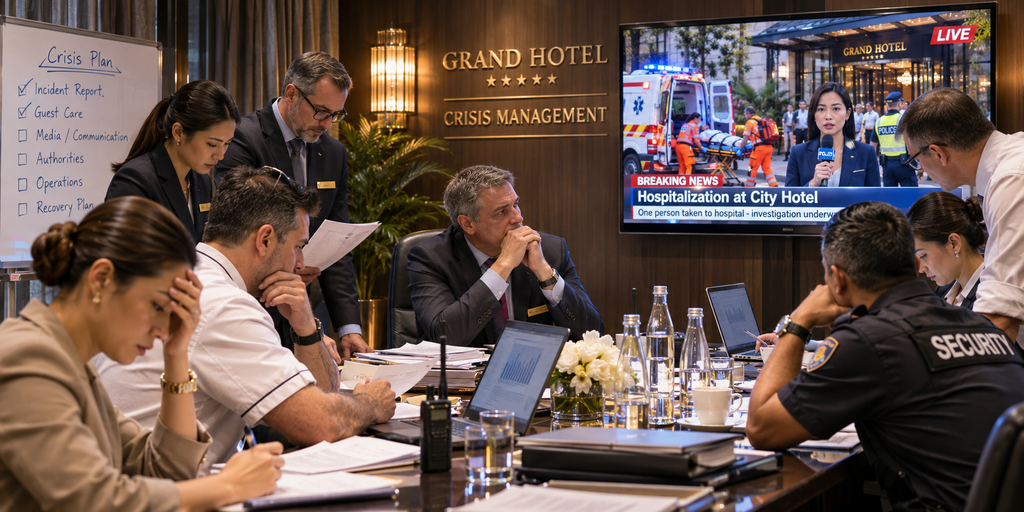
Each of these three dimensions will be explored in a dedicated article, providing a deeper understanding of shock resistance, post-incident analysis and crisis management.